Fatigue. Cravings. Belly fat. Hormonal chaos. Poor sleep.
These sound like 'normal' modern problems but they're signs your internal timing system is misfiring.
Most people think circadian rhythm is about sleep or something wellness influencers talk about.
It actually your body's built in 24 hour timekeeper, and it runs every system you care about:
- Sleep.
- Digestion.
- Hormones.
- Fat-burning.
- Blood sugar.
- Metabolism.
- Immune function.
When you live out of sync with it, your health starts to break down.
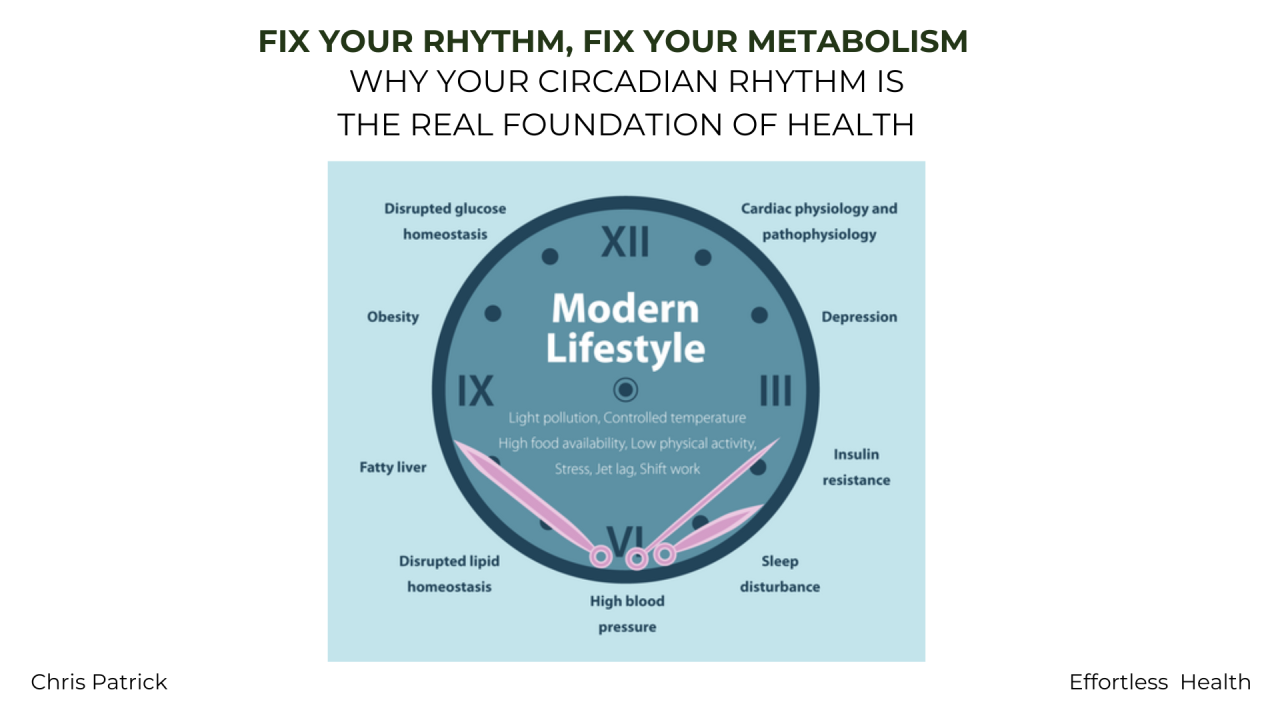
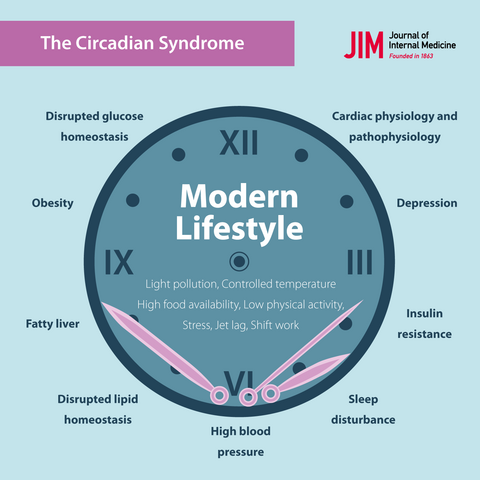
Circadian rhythm misalignment plays a central role in type 2 diabetes, cardiovascular disease, ageing, hypertension, sleep apnoea, fatty liver, PCOS, cancer and depression as well as some other cardiovascular disease risk factors including dyslipidaemia.
What is circadian rhythm, really?
You have an internal 24 hour clock that's hardwired into your brain and every single cell in your body.
This system is called the circadian rhythm.
It evolved to sync with the rising and setting of the sun.
- Wake up with sunrise.
- Wind down after sunset.
- Sleep and repair in darkness.
- Be alert and active during the day.
It's a biological blueprint that has worked perfectly for 99.9% of human history.
Then we moved indoors, invented screens, and nuked it.
Light is the master signal
The primary driver, or zeitgeber, of your circadian rhythm is light.
(A 'zeitgeber' is the term for the cues that synchronise your circadian rhythm, it's a German word that means "time givers.")
Your body doesn't just see light. It reads light and relays that signal to your brain, organs, cells and mitochondria.
Specifically:
- Morning sunlight tells your brain it's daytime and regulates cortisol (naturally).
- UV exposure regulates hormones like leptin, serotonin, melatonin.
- Blue light from the sun calibrates your internal clock. (Blue light from artificial sources before sunrise or after sunset disrupts it.)
- Darkness triggers melatonin release, recovery, and repair.
Other cues are food timing, movement, temperature, social, and darkness.
Your body listens to all of these to decide how it will produce hormones, store fat, burn energy, rest, or repair.
Every organ has a clock
This is not confined to your brain.
Every major organ runs on its own internal timer:
- Your gut has a clock, digestion shuts down at night.
- Your liver has a clock, detox pathways are time dependent.
- Your fat cells have clocks, they burn or store based on timing.
- Your pancreas has a clock, insulin works better during the day.
- Even your muscles, heart, immune cells, and mitochondria all follow a daily rhythm.
Your body is reacting to what you do but also to when you do it.
What happens when your circadian rhythm breaks?
The direct result of living indoors all day, under artificial light, eating processed food at random times and scrolling in bed is:
- Cravings.
- Poor sleep.
- Afternoon slumps.
- Sluggish metabolism.
- Blood sugar instability.
- Hormones not working as they should.
- Increased fat storage (especially visceral fat).
Modern health problems are often circadian problems in disguise.
So how do you live in sync?
Here's what I guide clients to do, seemingly small shifts that create powerful results:
- Sleep in total darkness.
- Movement during the day.
- Avoid food 3+ hours before bed.
- Dim lights and block blue light after sunset.
- Anchor wake/sleep times even on weekends.
- Get natural light within 30 minutes of waking.
- Go outside regularly during the day, especially morning and midday.
- Eat meals in a consistent daytime (if possible) window of 10 to 12 hours.
You don't need to be perfect.
Every step toward circadian alignment helps your hormones, energy, blood sugar, and sleep work in line with your natural rhythm.
Fat loss gets easier. Energy stabilises. Sleep deepens. Cravings fade. Hormones rebalance. Recovery happens.
Your circadian rhythm is the operating system behind everything else.
When the rhythm is working in line with light cycles, the system starts to run smoothly.
This is the foundation of real, effortless health.
Is your circadian rhythm the root cause?
The quiz identifies whether circadian disruption is your main bottleneck. Most founders who score low in that module don't realise it's affecting everything else.
Take the quiz →Ready to talk now? Book a call instead.