Up until 1879, when the light bulb was invented, the sun dictated when we woke up and when we slept.
We rose with sunrise, spent our days outside under bright natural light, and wound down with the setting sun. Firelight and darkness signalled the body to rest.
Fast forward to 2025, we spend most of our days inside under dim artificial light all day and stare at bright screens and LEDs all night.
This has resulted in:
- Disrupted circadian rhythms
- Later bedtimes and lower quality sleep
- Low energy and metabolic dysfunction
- Higher stress hormone and blood sugar levels
But what would happen if we returned to a pre-1879 light environment?
One way to test this would be to go camping and compare our modern artificial light environment to a completely natural one.
Enter the study 'Entrainment of the Human Circadian Clock to the Natural Light-Dark Cycle', a fancy way of saying... we're going camping.
What happened in the study
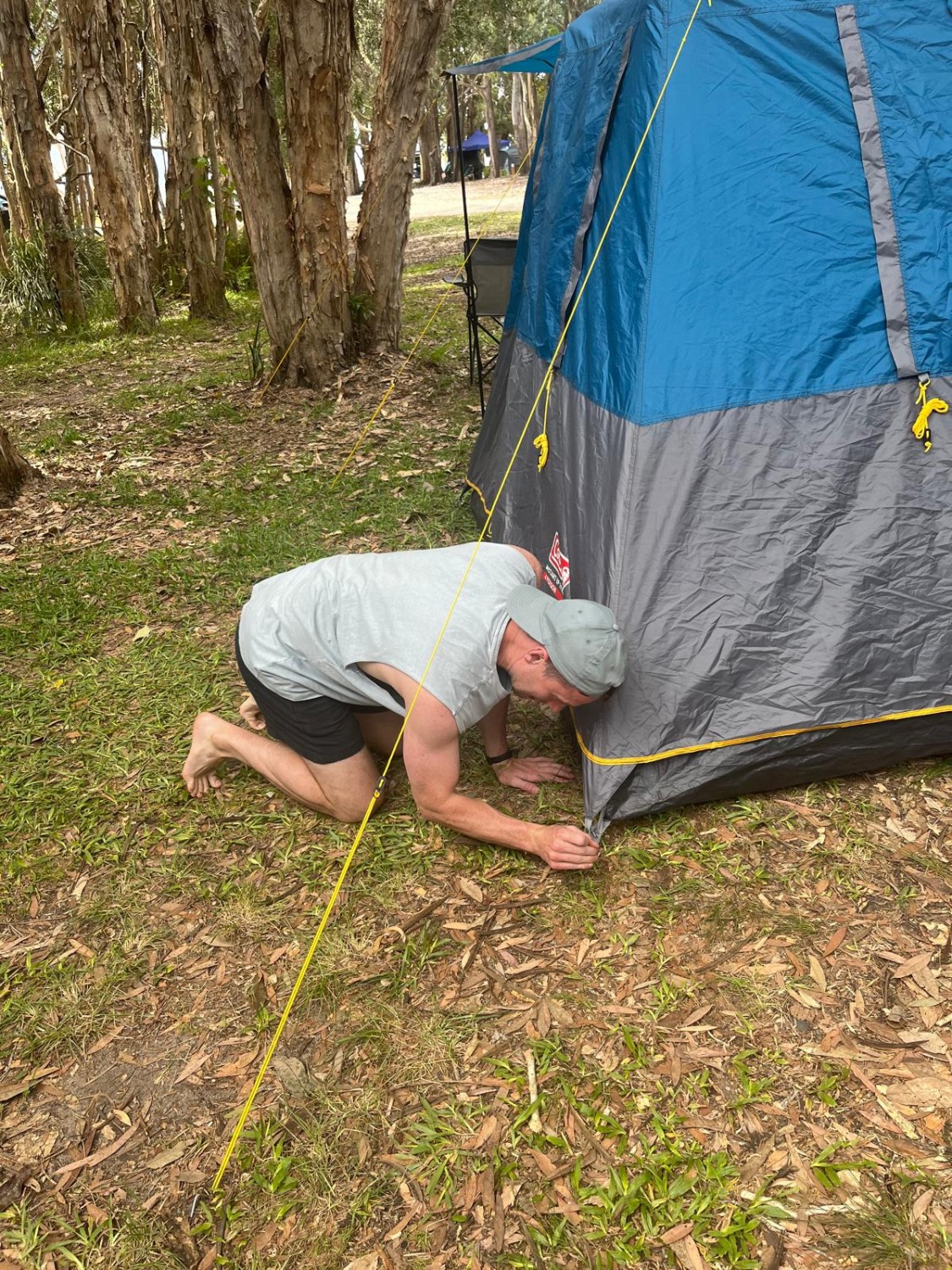
Participants spent one week living under their normal modern artificial lighting conditions, followed by one week camping outdoors, exposed only to natural daylight and darkness.
Both early birds and night owls were included in the study.
Researchers tracked:
- Light exposure (measured in lux)
- Sleep patterns (when participants naturally fell asleep and woke up)
- Melatonin onset and offset (when the body started and stopped producing melatonin)
Note: The study was small in sample size with 8 participants.
What were the results?
The contrast between artificial and natural light environments was staggering:
1. Daytime Light Exposure
To be expected under the artificial environment lux averaged 979, far too dim to properly signal daytime.
Whilst outdoors in natural daylight, lux was 4 fold higher at 4478.
Indoor environments fail to provide the strong light cues needed to regulate our circadian rhythm, while natural daylight properly anchors the body's internal clock.
2. Sleep timing
Both average sleep onset and wake times shifted 1.2 hours earlier in the natural environment.
In artificial light participants fell asleep on average at 12:30am and woke up at 8:00am.
In the natural light environment they fell asleep at 11:10pm and woke up at 6:40am.
3. Melatonin
Artificial light delayed melatonin onset by 1.5-2.5 hours. Participants' melatonin levels remained high in the morning, making it harder to wake up.
Under natural light, melatonin started to rise after sunset, and tapered off around sunrise allowing for earlier sleep onset and an easier wake up.
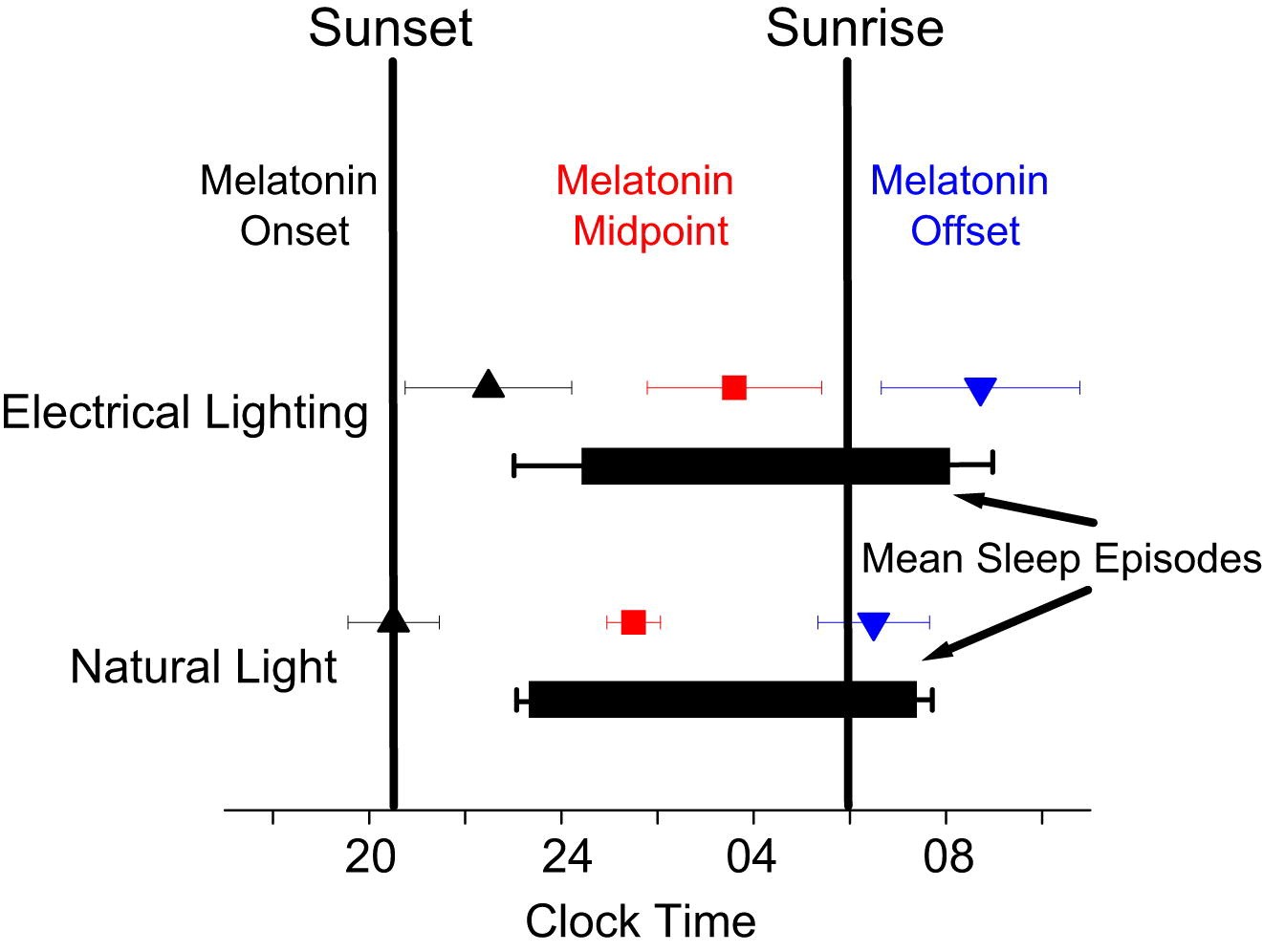
Morning types shifted about 1 hour earlier and night owls shifted 2.5 hours earlier when exposed only to natural light.
If you are constantly groggy in the morning, this may be the reason.
Your "natural" bedtime might not be what you think
Many people assume they're naturally night owls, but the study suggests otherwise.
When participants lived outdoors with only natural light, they fell asleep nearly two hours earlier than they did under artificial indoor lighting.
This suggests that much of what we think is our "natural" sleep preference isn't biological, it's shaped by artificial light exposure at night.
If you struggle to fall asleep early, it may not just be your genetics, it may be your environment.
How to fix your light environment (Without going off-grid)
To fix your light environment you need to mimic the conditions in outdoor camping.
This means a tent and firelight not those SUV Campervans with all the modern appliances and bright lights.
- Get natural light first thing: Get bright outdoor light within 30 minutes of waking to set your circadian rhythm.
- Increase natural daylight indoors: Open and work near open windows to increase daylight exposure. Take regular outdoor breaks.
- Dim the lights at night: Replace bright LEDs with warm, low-intensity amber/red bulbs in the evening. Use lamps closer to the floor to mimic natural firelight.
- Block evening blue light: Use red filters on your phone/tablet/computer (f.lux, One Tap Zap). Wear blue-light-blocking glasses when using screens after sunset.
- Sleep in darkness: Use blackout curtains or sleep masks, remove or cover LEDs in your room, and keep your bedroom dark.
Fixing your light environment = fixing your sleep, energy and circadian rhythm
Lack of natural light during the day and overexposure to artificial light at night delays sleep, makes waking up harder, and throws off your entire internal clock.
When you align with natural light cycles, you fall asleep earlier, you wake up easier, and you feel energised throughout the day.
Your body was built for sunlight during the day and darkness at night.
Go camping.
Is light the reason your sleep won't improve?
The quiz scores your sleep and circadian health together. 2 minutes to find out whether light exposure is your biggest lever.
Take the quiz →Ready to talk now? Book a call instead.