Modern nutrition advice focuses on what to eat. Protein, Carbs, Fats, Macros, Calories.
The other variable that matters just as much: when you eat.
Meal timing is a biological signal that tells your body what time it is.
If it's out of sync, even the best diet can backfire.
Your metabolism runs on a clock
Your body is governed by circadian rhythms, 24-hour cycles tied to the rising and setting of the sun.
That includes your digestion, hormones, insulin sensitivity, fat burning, and energy regulation.
Eating is a zeitgeber a "time-giver" that tells your body what time it is. When you eat, you're sending a signal to your biological clock.
Eat in sync with these rhythms (during daylight), and your body runs like clockwork.
Eat out of sync (late at night), and things begin to break down, cravings, blood sugar swings, fat storage and poor sleep.
How does meal timing impact your biology?
In the morning your body is primed to handle food.
- Cortisol peaks naturally to mobilise energy.
- Insulin sensitivity is highest in the morning.
- Digestive enzymes are ready to process nutrients.
- Mitochondria are most efficient and ramp up energy production.
- Leptin and ghrelin (your hunger and fullness hormones) reset with early light exposure and a first meal.
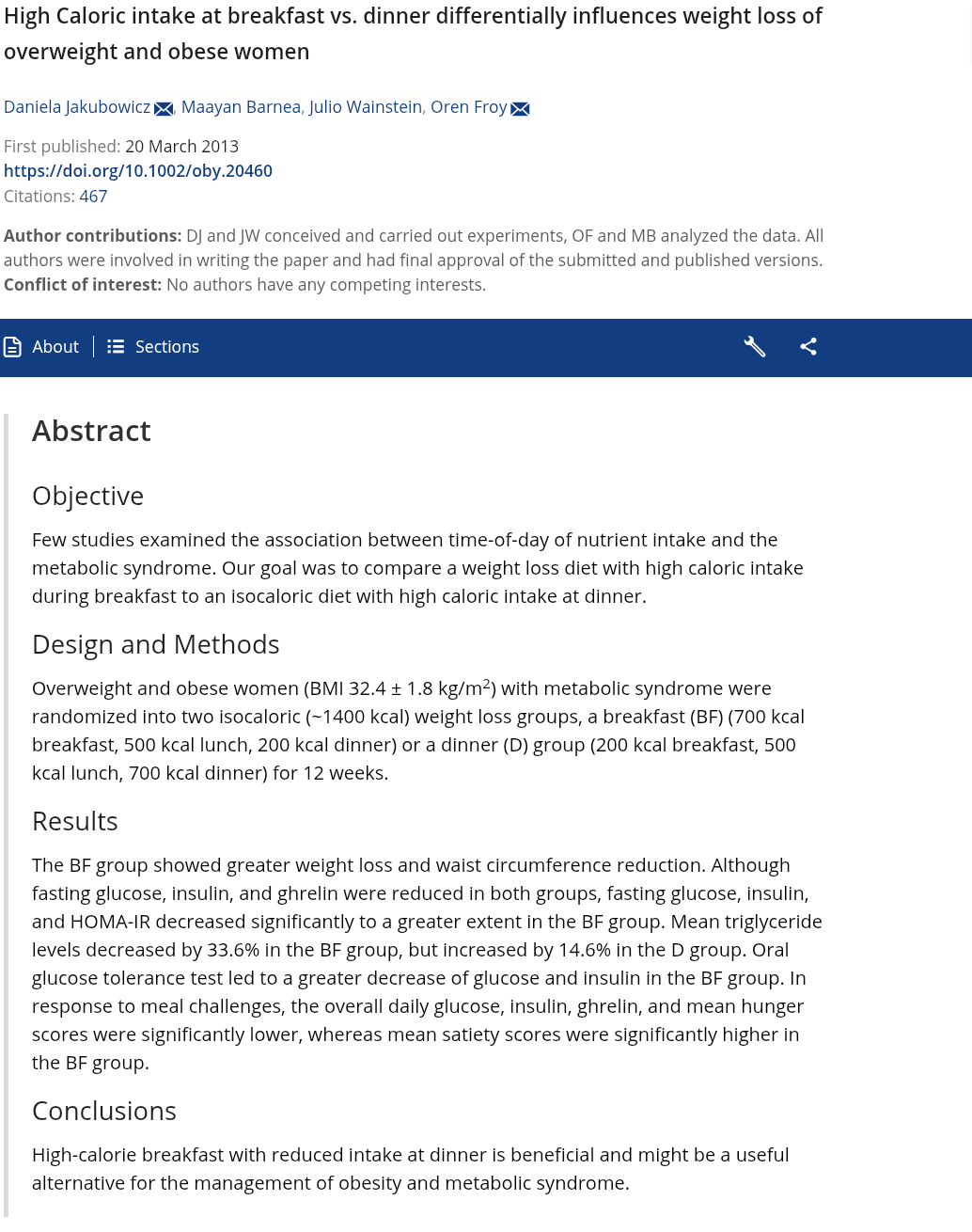
This is why front-loading your meals earlier in the day works so well, especially for blood sugar and fat loss.
In the evening, your body wants to get into rest and repair mode, not digest food.
- Insulin sensitivity drops in the evening.
- Food eaten late at night is more likely to be stored as fat.
- Late eating disrupts sleep, recovery, and next day hunger.
- Melatonin rises, slowing digestion and pancreatic function.
- Mitochondria change from producing energy to repairing damage.
Your metabolism shifts gear at night from processing to repair.
Eating late confuses the system and blunts fat burning.
What happens when you get this right?
- Deeper sleep.
- Better digestion.
- More stable blood sugar.
- Reduced cravings and snacking.
- Increased energy throughout the day.
- Easier fat loss (especially visceral fat).
This is why changing when you eat is just as important as what you eat.
What I recommend for clients
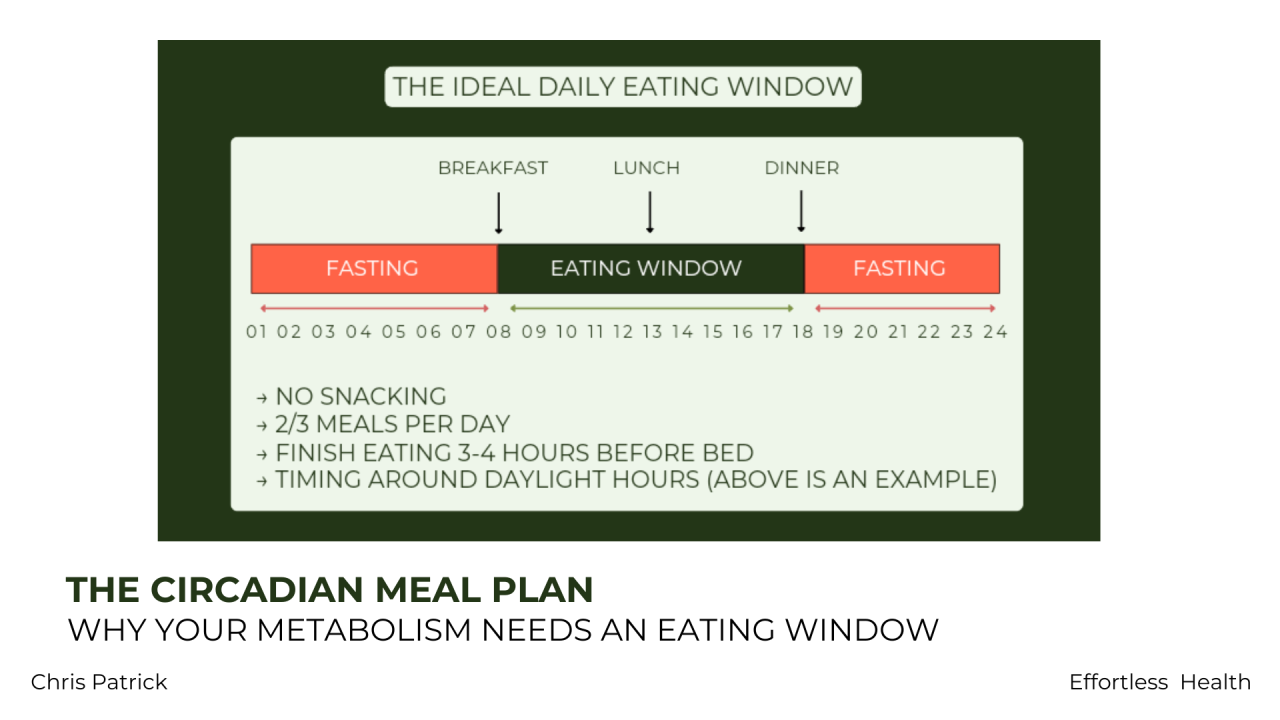
- Eat within a 10-12 hour window ideally between sunrise and sunset. Flexibility during winter/summer.
- Prioritise protein and nutrients early in the day.
- Avoid snacking between 2/3 meals allowing insulin to drop.
- Ideally, finish eating by 7pm (3 to 4 hours before bed) to give your body time to digest and repair.
- Try walking outside after meals to support digestion and glucose control.
Morning (within 30-60 mins of waking): Include high protein, some healthy fats, and carbs if appropriate (Dependent on where you live and season). This anchors your circadian rhythm and stimulates proper hormone release.
Lunch: Protein + veg + some carbs if appropriate and more acceptable if you're training or highly active. Some choose to skip lunch and that is absolutely fine if you're not hungry.
Dinner: Lightest meal of the day. High protein + healthy fats. Low carb unless you've exercised before. Ideally, finish eating at least 3 hours before bed.
This will typically result in reduced Triglyceride levels (Fat in the blood), Increased HDL cholesterol levels, reduced Hba1c and improvements in fatty liver.
Meal timing is one of the simplest changes with a huge health return.
Counting calories, fasting for 7 days, or skipping breakfast is not required.
Eat like a human living in daylight, like your ancestors would have.
When your meals align with your circadian rhythm, you are rewarded with effortless metabolic health.
Is your meal timing working against your metabolism?
The quiz includes a circadian health module. 2 minutes to find out whether your eating window is a key lever for you.
Take the quiz →Ready to talk now? Book a call instead.