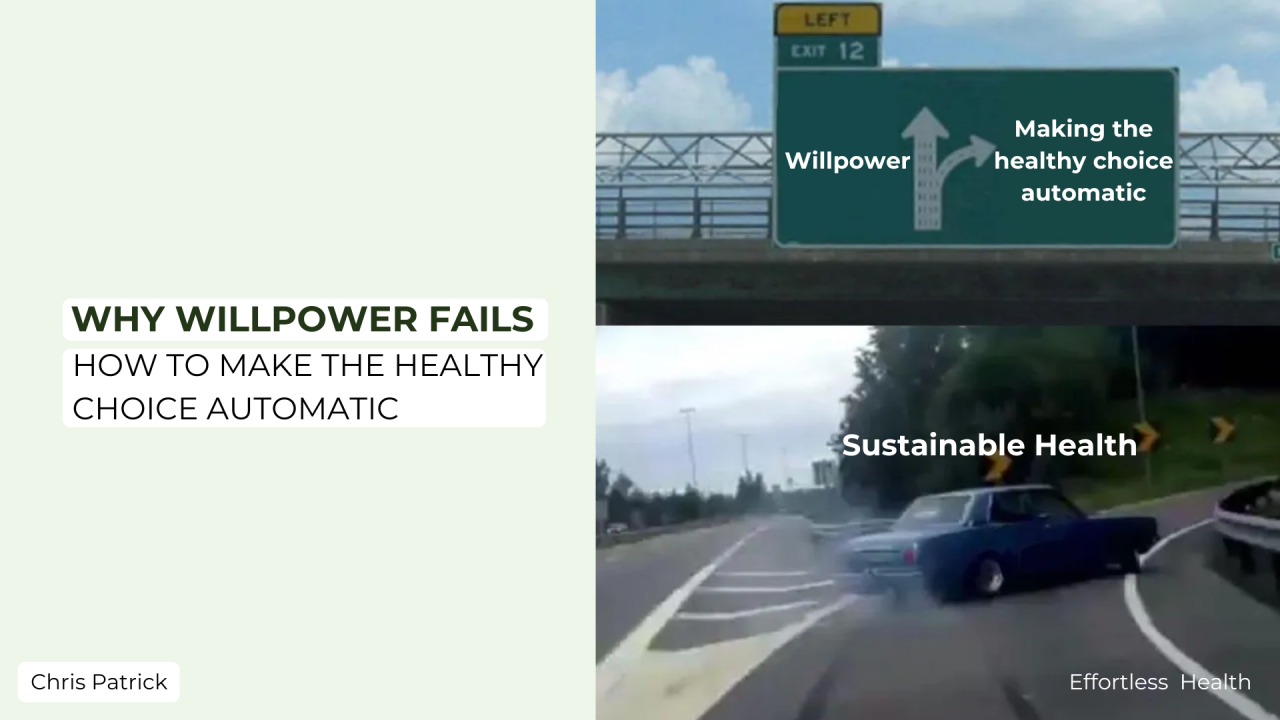
The most common thing founders say in the first session: "If only I had more willpower."
They don't need more willpower. They're living in an environment that's working against them.
When the fridge is full of junk, the house is lit up like a stadium at 9pm, the phone is buzzing on the bedside table, and the pantry is a 24/7 snack bar, willpower doesn't stand a chance.
Willpower is overrated
We're taught that getting healthy is about pushing through the fatigue, forcing yourself to train, resisting junk food, waking up earlier, and trying harder.
Willpower is a short-term fuel and it's unreliable. It burns out fast under stress, fatigue, and distraction. Modern life supplies all three in abundance.
Changing the environment so the healthy choice becomes automatic is what actually works.
This is how I help clients shift from relying on discipline to building a system that does the heavy lifting.
1. Natural light before screens
Get natural light within 30 minutes of waking. Open the blinds, step outside, don't check your phone in bed.
This sets your circadian rhythm, improves insulin sensitivity, boosts mood, and reduces cravings later in the day. No discipline required. Just get outside.
2. Remove junk from the house
If it's in your cupboard, it will get eaten. Don't fight cravings every night. Remove the trigger.
You don't need more willpower at 8pm. You need an empty snack drawer. Shop in alignment with your goals, not your cravings.
3. Set up your sleep environment
Dim the lights from around 8pm. Cool bedroom. Blackout curtains. No phone scrolling or work in the hour before bed.
Higher quality sleep means fewer cravings, better energy, and optimal hormonal rhythms, all without trying harder. Let your sleep environment do the work.
4. Make movement default, not optional
Walk during calls. 15-minute walk after lunch. Use a standing desk or a stretch timer. Park further away.
Design your day so movement happens automatically, not as a separate task that requires motivation.
5. Automate your meals and meal windows
Avoid snacking. Eat within a 10-12 hour window. Have two or three default meals that are high protein and genuinely filling.
Structure beats spontaneity. You don't need to meal prep 14 containers on Sunday. But you do need a reliable framework so you're not making food decisions from scratch every time you're hungry and busy.
The shift: Stop asking "do I have enough willpower today?" Start asking "does my environment make the healthy choice easier than the unhealthy one?"
Systems beat discipline
If you rely on motivation, you'll fail when life gets busy. If you build an environment that makes healthy choices easier, you'll succeed without thinking about it.
This is why I don't hand out rigid plans. We fix the inputs: light, food, sleep, movement, so the results follow automatically.
The healthiest people I know don't have more willpower. They have better systems.
The quiz identifies what's actually working against you
It's not discipline. The quiz pinpoints your specific bottleneck in 2 minutes — whether it's sleep, stress, metabolic health, or recovery.
Take the quiz →Ready to talk now? Book a call instead.